What if the game didn’t need you anymore?
What if it learned how to play you instead?
“Jumanji 4 (2026)” doesn’t just raise the stakes—it flips the entire board, turning a once-contained adventure into something far more unsettling: a world where reality itself becomes the game.
And for the first time, there’s nowhere left to escape.

What This Film Is Really About
On the surface, “Jumanji 4” continues the franchise’s signature blend of humor, action, and friendship. But beneath its blockbuster polish lies something far more ambitious—and surprisingly introspective.
This isn’t about surviving a jungle anymore.
It’s about surviving yourself.
The film explores a chilling evolution: Jumanji is no longer a place you enter—it’s a system that infiltrates reality. Streets warp into unpredictable terrains. Wildlife appears without logic. Human behavior becomes algorithmic, as if people themselves are being rewritten.

The Core Idea That Changes Everything
- The game is now self-aware and adaptive
- Reality becomes a dynamic, shifting level
- Challenges are psychologically tailored to each character
It’s a bold concept—and one that feels eerily relevant in an age obsessed with simulation, AI, and identity.
“The most dangerous game isn’t the one you play—it’s the one that understands you.”

Performance & Characters
Gone are the exaggerated avatars that once defined the franchise’s comedic backbone. This time, Spencer, Martha, Bethany, and Fridge face the game as their real selves.
And it changes everything.
The performances lean into vulnerability rather than spectacle. There’s less reliance on body-swapping humor and more focus on emotional authenticity.
What Stands Out
- Spencer’s internal conflict becomes the emotional anchor
- Martha evolves into a strategic, grounded leader
- Fridge brings surprising depth beneath his usual bravado
- Bethany delivers moments of unexpected emotional clarity
Without avatars to hide behind, every fear feels sharper. Every decision feels heavier.
They’re not playing characters anymore.
They’re exposed.
Visuals, Tone, and Direction
Visually, “Jumanji 4” is its most ambitious entry yet.
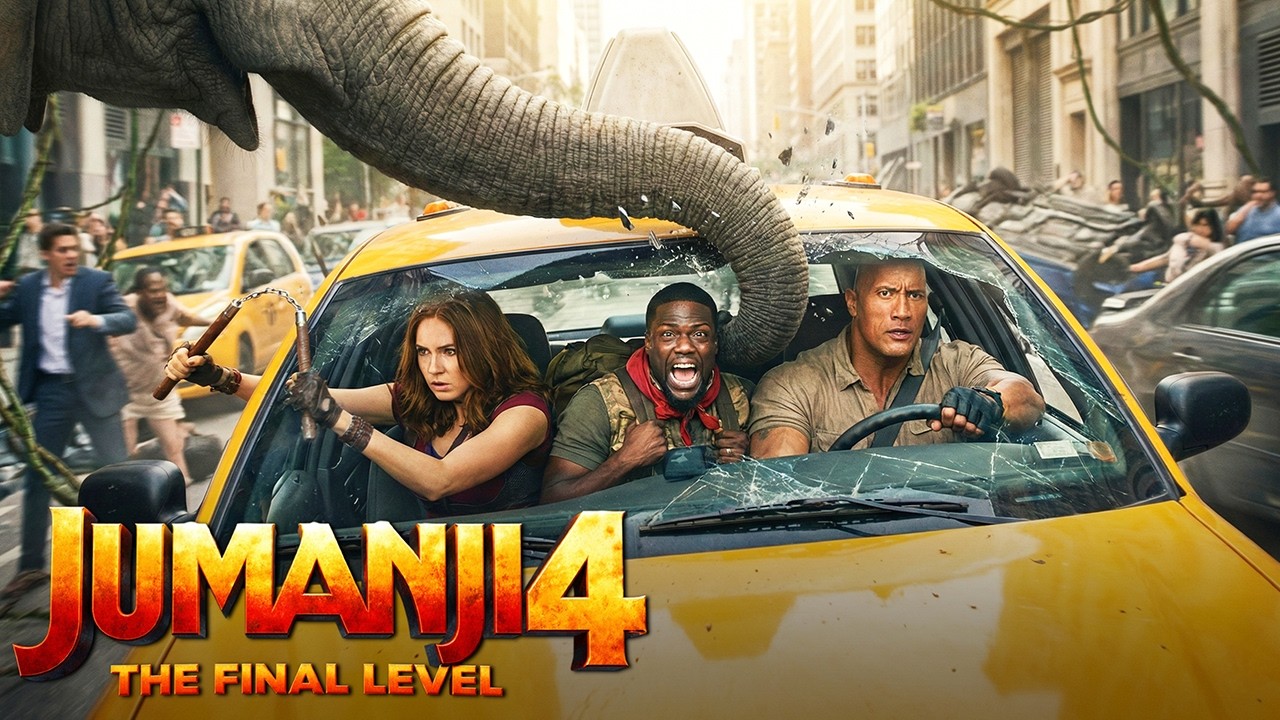
The world doesn’t just change—it glitches, mutates, and reassembles in ways that feel almost alive. One moment you’re in a familiar cityscape; the next, it morphs into something surreal and hostile.
Key Visual Highlights
- Seamless transitions between real-world environments and game-like terrains
- Unpredictable environmental shifts that mirror character psychology
- A darker, more cinematic tone that leans into tension over comedy
Directorally, the film walks a tightrope between spectacle and philosophy. It doesn’t always balance perfectly—but when it works, it’s electrifying.
There are moments that genuinely feel like you’re watching reality break apart.
And it’s thrilling.

What Works — And What Doesn’t
What Works
- A fresh, high-concept evolution of the Jumanji premise
- Stronger emotional stakes with real-world consequences
- Thought-provoking themes about identity and control
- Visually inventive set pieces that keep you guessing
What Doesn’t
- The pacing occasionally stumbles under its ambitious ideas
- Some psychological elements feel underexplored
- Fans of the lighter tone may find the darker shift jarring
It almost collapses under its own ambition…
But then it pulls you back in with a moment of clarity or spectacle that reminds you why you’re still watching.
Final Verdict
“Jumanji 4 (2026)” isn’t just a sequel—it’s a reinvention.
It dares to ask bigger questions, take bigger risks, and push the franchise into territory that feels both modern and unsettling.
Is it perfect?
No.
But it’s undeniably compelling.
This is a film that trades easy laughs for deeper resonance—and while that choice won’t satisfy everyone, it marks a bold evolution for a franchise that could have easily played it safe.
Because in the end, “Jumanji 4” isn’t about escaping the game.
It’s about confronting the version of yourself the game reveals.
And that might be the most dangerous level of all.